Sushi Poker rules: PPPoker, X-Poker and the small-blind pot
Sushi Poker adds a separate prize to a poker table. It can grow across several hands, and the small blind gets the chance to collect it by meeting the award rule. That extra balance is easy to notice. The payment timing and the meaning of “sole main-pot winner” deserve just as much attention.
PPPoker has Sushi Game. Its official July 30, 2026 launch announcement confirms the feature in clubs and describes the core rules. X-Poker also has a documented Sushi version, with different wording around contributions and exceptions. Keep the two rule profiles separate.
This guide uses imaginary big-blind amounts to explain the accounting. They are teaching examples, not standard settings, live tables or a promise of profit. Start with the rule profile for your app, then try the short reveal-the-answer exercises.
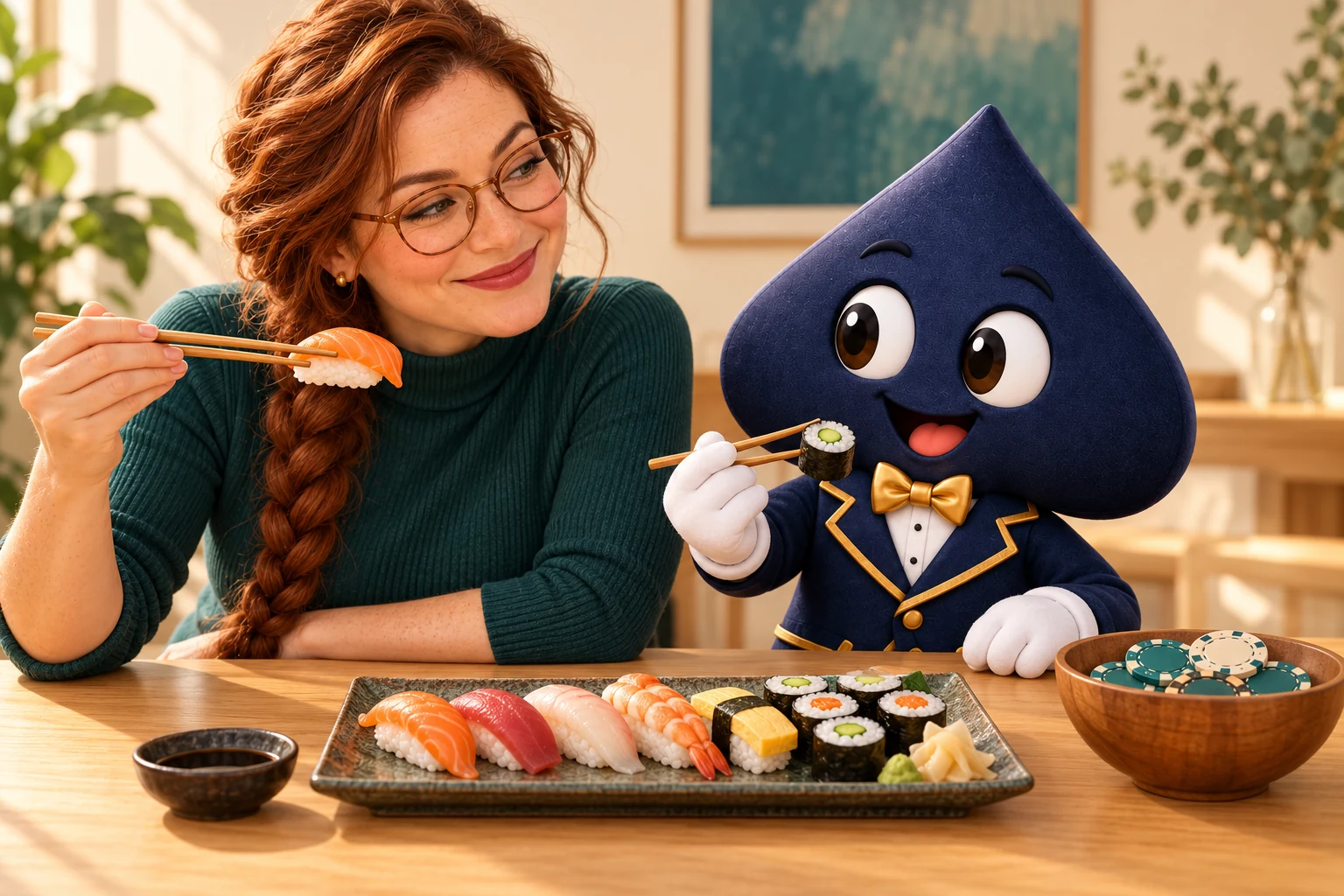
Two pots, two questions
The ordinary poker pot answers who won the hand and how much each eligible player receives. The Sushi pot answers a further question: did the player in the small blind qualify for this extra award? A normal payout does not answer both questions.
Think of two bowls on the table. One holds the blinds, calls and bets from the current hand. The other holds the Sushi contributions. Chips paid into the second bowl do not become a live bet you can count toward an ordinary call. Likewise, a large ordinary pot does not automatically increase the Sushi balance.
The normal small blind and a Sushi small-blind ante are separate charges. Never infer the extra charge from the blind size alone. Read the actual amount and deduction timing in the table settings. In this article, 1 BB means one big blind; it does not mean one dollar or one unit of a club currency.
There is another naming trap. An all-in side pot belongs to the ordinary poker hand and arises from unequal contributions. The Sushi pot is a separate table feature. Calling both a “side pot” can hide which rule you are trying to apply.
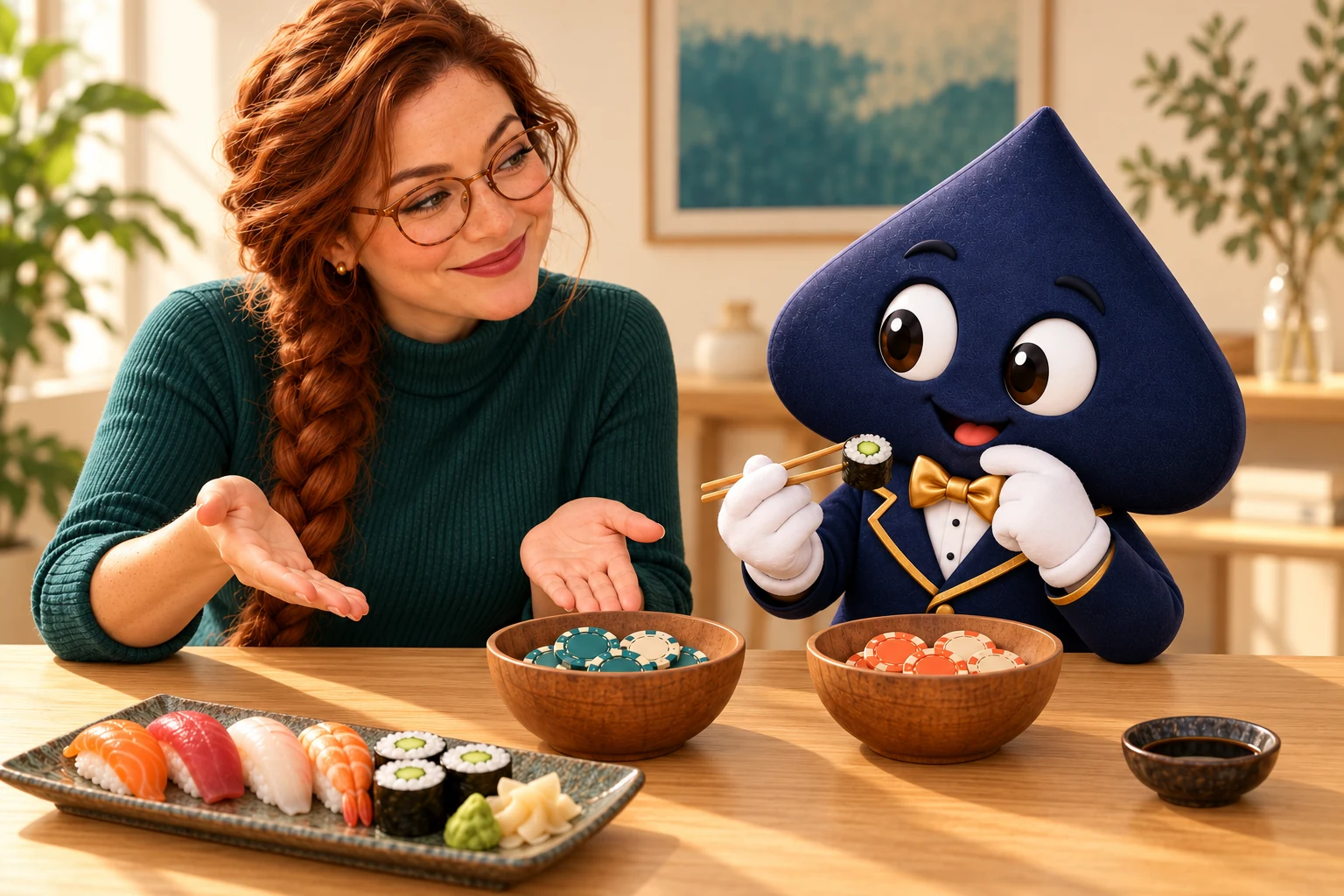
The verified PPPoker rule profile
PPPoker describes a starting ante from participants. At hand end, the small blind receives the entire Sushi pot if they alone win the main pot. Otherwise, that hand’s small blind pays an additional ante and the balance carries forward. The announcement gives ties and Run It Multi-Times as examples of failing the sole-winner condition.
Leaving does not return prior contributions. When Sushi is awarded, participating players’ hole cards are automatically disclosed at showdown. The announcement does not explain the full reset sequence, late entry, insufficient stacks, insurance or a complete sweep of multiple runouts.
Those missing details matter when the relevant situation comes up. Use the current in-app help rather than treating a brief launch announcement as a complete rulebook. For the wider club model and app information, read the HPD PPPoker guide.
The documented X-Poker rule profile
A reproduced X-Poker Game Rules screen specifies an initial ante before a Sushi round and a small-blind ante at the end of each hand. It awards the bonus to the sole main-pot winner in the small blind, with split pots, multiple runouts and insurance listed as exclusions. Contributions remain behind when a player leaves.
This is a documented screen, not a fresh HPD test of the current app. Its payment wording differs from PPPoker’s failed-attempt wording. Check the current client for winning-hand contribution timing, reset rules and any relevant exception before applying the arithmetic below. The HPD X-Poker guide covers the broader platform.
A hand is one deal. An orbit is a rotation of positions. A Sushi round can span several hands; it should not be assumed to end after one orbit. Nor does “initial ante” tell you, by itself, exactly how every later round or new arrival is charged.
Follow one PPPoker-style accumulation
Here is a closed teaching example using PPPoker’s described unsuccessful-hand timing. Six initial contributors each pay 2 BB, so the opening Sushi balance is 12 BB. Assume a failed small-blind attempt requires another 1 BB. Nobody joins or leaves during the example, and no new starting contribution is introduced.
| Step | What happens | Sushi balance |
|---|---|---|
| Start | Six contributions of 2 BB | 12 BB |
| Hand 1 | The small blind loses and adds 1 BB | 13 BB |
| Hand 2 | The small blind ties the main pot and adds 1 BB | 14 BB |
| Hand 3 | The small blind folds and adds 1 BB | 15 BB |
| Hand 4 | The small blind qualifies and wins the main pot alone | 15 BB awarded |
The calculation is 6 × 2 BB + 3 × 1 BB = 15 BB. Each unsuccessful hand has its own small-blind player. The extra payment belongs to the unsuccessful small blind from that hand, rather than the next player simply because the position moves.
The fourth hand has no failed-attempt charge in this example. We stop at the award. Adding a fresh starting balance after it would require a reset rule that the short announcement does not spell out.
Ordinary bets stay out of this table. If the main pot on hand four is 40 BB, the winner receives two gross awards: 40 BB and 15 BB. Count them once each. Whether that player made a profit requires their own contributions, which we calculate below.
Exercise 1: five players pay 3 BB, then four failed attempts add 2 BB each. What is the balance?
23 BB. The opening amount is 5 × 3 BB = 15 BB, and the recorded additions total 4 × 2 BB = 8 BB. Therefore 15 BB + 8 BB = 23 BB. This exercise starts with all five initial payments recorded and has no award, new entrant or reset.
Exercise 2: the small blind ties the main pot in the 1 BB teaching setup. Who adds the extra ante?
The small blind from the tied hand adds 1 BB. Sharing the main pot does not satisfy a sole-winner condition. The next small blind gets the next opportunity; they do not inherit the previous player’s failed-attempt charge.
Winning the side pot is not enough
Suppose three players finish their betting with total contributions of 20 BB, 60 BB and 60 BB. The 20 BB player is all-in, and all three remain eligible for the main pot. For clarity, ignore rake and other charges.
The main pot contains 20 BB from each player, or 60 BB. The two deeper players each contributed another 40 BB, creating an 80 BB side pot. Together the ordinary pots contain 140 BB, exactly matching the total contributions.
Now give the short stack the best hand. They receive the 60 BB main pot. The small blind, one of the deeper players, has the second-best hand and receives the 80 BB side pot. That is a real poker payout, but the small blind did not win the main pot. The Sushi requirement has not been met.
The largest payout can therefore go to someone who does not qualify for Sushi. Look for the main-pot winner in the result or hand history before treating a missing bonus as an error. A tie is simpler: if the small blind shares the main pot, they are not its sole winner.
Exercise 3: contributions are 15 BB, 45 BB and 45 BB. The small blind wins only the side pot. How much is it, and does it qualify?
The main pot is 3 × 15 BB = 45 BB. The side pot is 2 × 30 BB = 60 BB. The small blind receives 60 BB from the ordinary side pot but does not meet a sole-main-pot-winner condition. The total is 105 BB, matching 15 + 45 + 45.
A quick lunch-break comic
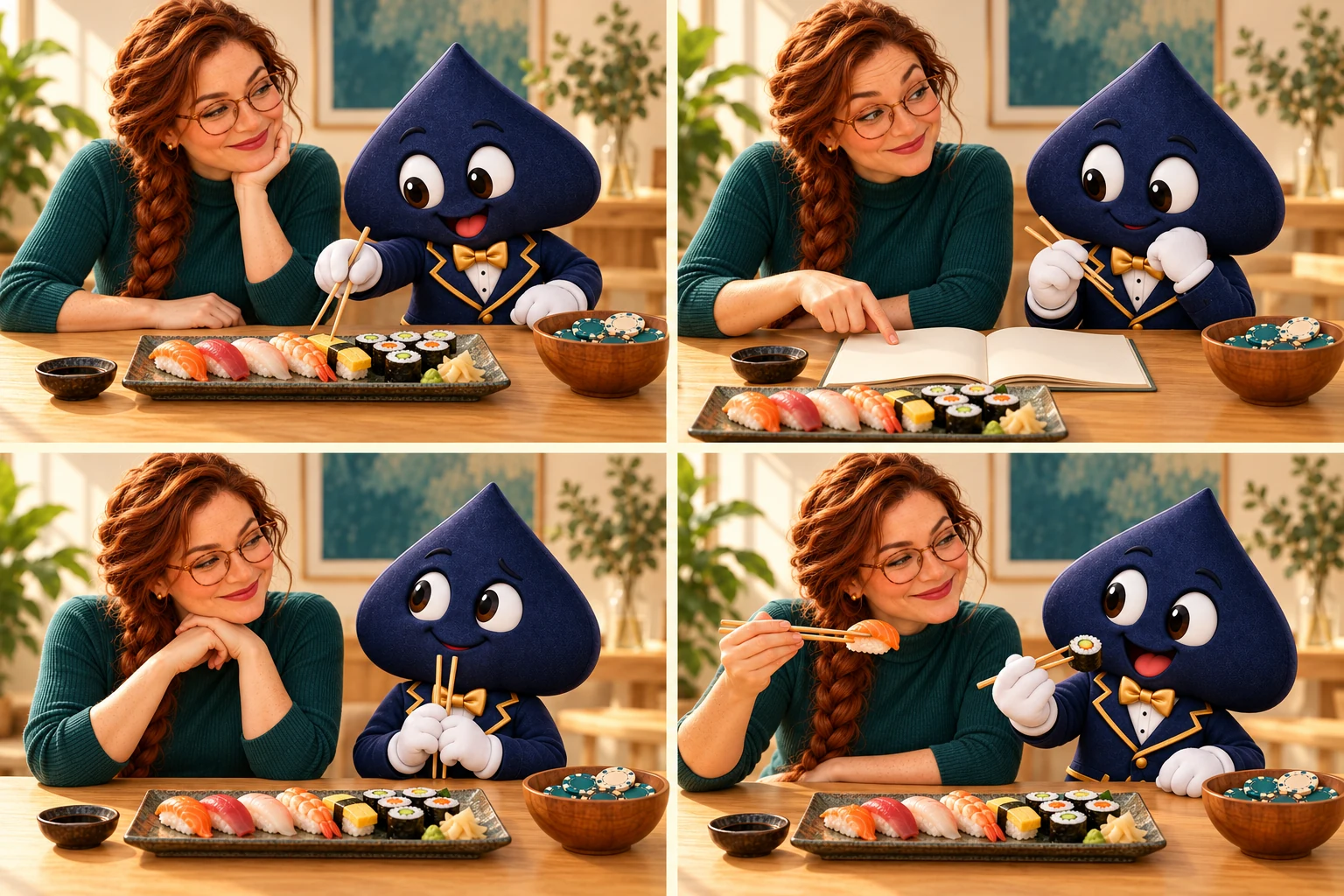
- Panel 1. Ace: “I won chips. Does that mean the whole platter is mine?”
- Panel 2. Teacher: “Which pot did you win, and which seat were you in?”
- Panel 3. Ace: “The side pot. I should check the main-pot result first.”
- Panel 4. Teacher: “Exactly. Now we can share the actual sushi.”
The food is only the joke. Poker awards follow the recorded result and the table rule; a bonus is not divided because the illustration shows a shared snack.
Gross awards and your actual result
Return to the 40 BB main pot and 15 BB Sushi award. The winner receives 55 BB in total. Suppose their own ordinary contribution was 16 BB and their starting Sushi contribution was 2 BB. Their net change for those fully listed entries is 55 − 16 − 2 = 37 BB.
That 37 BB is still not a whole-session result unless the record covers the whole session. Earlier lost hands, other antes and any separately charged fees belong in the accounting too. A screenshot of one large award cannot tell you the missing costs.
Write down debits and credits using the same unit and time window. If a payout already includes a chip amount, do not add it again because it also appears in a hand-history label. If a fee has already been deducted from a credited payout, do not subtract it a second time.
Exercise 4: you receive 48 BB, having paid 14 BB into the hand and 4 BB into Sushi. What is the net change for those entries?
30 BB: 48 BB − 14 BB − 4 BB. This answer assumes those are all the entries in the chosen window, with no additional charges. The 48 BB is a gross receipt; calling it profit would overstate the net gain by the 18 BB you paid in.
Read the extra-feature rules before an all-in
Multiple runouts and insurance deserve a check before you select them. Winning one of two boards can pay chips without making you the only main-pot winner. Sweeping every board raises a different eligibility question, and the PPPoker launch explanation does not settle it explicitly. X-Poker’s documented screen lists multiple runouts among its exclusions.
An insurance payment is also a separate result. It does not establish who won the main pot. X-Poker names insurance in its exclusions; the PPPoker announcement supplies no matching insurance rule. An answer for one app cannot fill that gap in the other.
Ask a narrow question about the option in front of you: does enabling this setting itself block Sushi, or does a specific result block it? For insurance, clarify whose transaction triggers the restriction. A general assurance that “Sushi works here” does not answer either question.

Exercise 5: a PPPoker small blind sweeps both runouts. Does this article establish that Sushi must be paid?
No. The launch announcement does not explicitly resolve the complete-sweep case. Check the current in-app rule for this exact situation. Neither a partial-board example nor X-Poker’s exclusion proves the PPPoker result.
Card disclosure, departures and session limits
PPPoker’s disclosed showdown rule deserves attention if you normally expect to muck a losing hand. Check how the current build handles folded participants, uncontested results and unusual showdown sequences if those details matter to you. The short announcement does not document every animation or exception, and it does not establish X-Poker’s disclosure behavior.
Previously paid Sushi contributions stay behind when you leave under the described rules. They are already spent. Staying to “get them back” introduces new decisions and new possible losses; the accumulated balance is not partly yours because you funded it.
For example, an earlier 4 BB contribution does not justify another 30 BB of bad calls. A growing pot can make it harder to stop, so decide your session time and loss limit before sitting down. Keep extra contributions inside that budget.
A table closing or a server interruption is a separate issue from a voluntary departure. Ask for the written unfinished-pot procedure if it affects your plans. The no-refund leaving rule alone does not establish how the system handles every interrupted game.
Exercise 6: you have contributed 4 BB and reached your planned stop time. Must you keep playing until Sushi is awarded?
No. The earlier contribution remains in the pot under the described leaving rule, but it creates no obligation to play another hand. Judge any future play by its future costs and your limits. The past 4 BB does not make the next call cheaper.
What to record before the first hand
- The app, exact base game and betting structure. Sushi does not replace the underlying Hold’em or Omaha rules.
- The starting contribution, later small-blind charge and deduction timing. Ask separately about a fresh round and a late arrival.
- The award condition and relevant options: ties, side pots, multiple runouts, insurance and any split-pot variant offered.
- Card-disclosure behavior, voluntary departure rules and the unfinished-table procedure.
- Ordinary rake, additional charges and the meaning of the displayed chip unit. A clear Sushi rule does not verify a club’s settlement reliability.
These answers help you understand the table. They do not prove the game is profitable or that the club will handle funds reliably. Avoid commitments you cannot afford to lose, and use only games permitted where you live. This guide is for adults aged 18 or over, subject to any higher local minimum age.
If a result looks wrong
Save the hand identifier and record the Sushi balance before the hand. Identify the small blind, the main-pot winner or tied winners, and each side-pot result. Then note any runout or insurance option and the extra contribution shown afterward.
Compare those entries with the current help and table settings. This separates an ordinary-pot calculation from an eligibility issue or a missing balance entry. Ask support about the specific mismatch rather than sending only a final-stack screenshot. Keep passwords, payment credentials and unrelated player details out of the report.

Keep the two accounts separate. Use the rule for the app you are playing. When a detail is unresolved, a precise question before the hand is worth more than an argument afterward.
The HPD spade has one more bowl to label. Follow it to the main-pot, side-pot and uncalled-bet lesson before mixing an ordinary pot award with the separate Sushi account.
Ace has also brought a squid marker to the table. For a different side-game structure, explore the Squid Poker guide to markers, round endings and settlements. Keep its named rule profiles separate from Sushi; the payouts are governed by different rules.